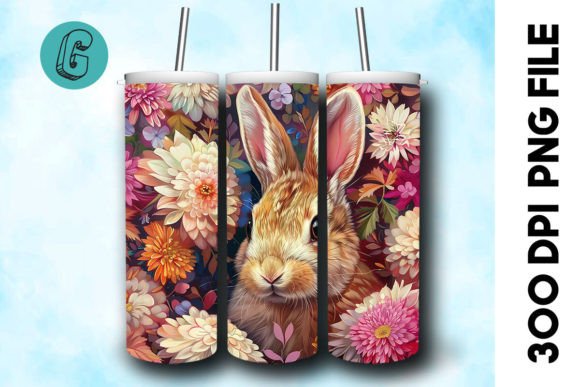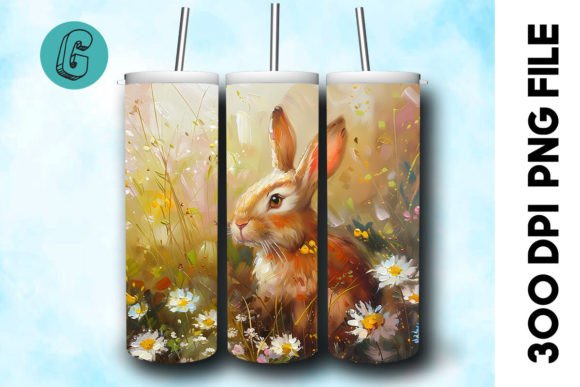
Oil Paint Easter Bunny Tumbler Wrap 31
A Designer’s First Look: Soft, Playful, and Purpose-Built
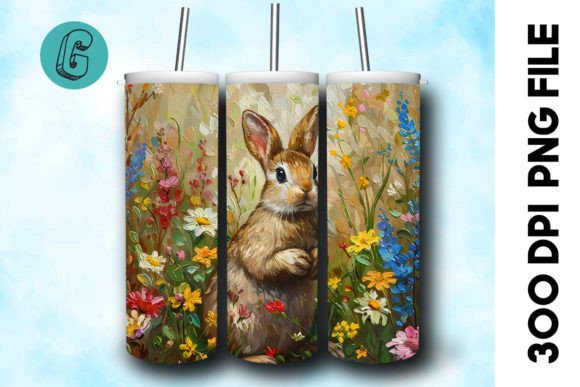
When I opened Oil Paint Easter Bunny Tumbler Wrap 31, my immediate thought wasn’t “cute bunny”—it was “this has rhythm.” The brushstroke texture feels intentional, not just decorative. There’s a gentle asymmetry in the bunny’s pose, a slight tilt to the ears, and a loose, painterly outline that reads as hand-finished—not rigid or overly digitized. As a designer who regularly translates digital graphics into machine embroidery designs, I appreciate how this background-style graphic leans into its own medium: it’s not trying to be photorealistic, nor is it stripped down to minimal line art. It sits perfectly in that sweet spot for crafters who want visual warmth without sacrificing stitchability.
Where This Design Lives Best—And Why
I recently used Oil Paint Easter Bunny Tumbler Wrap 31 as the central motif on a set of linen tea towels for a local boutique’s Easter launch. We stitched it as a standalone embroidered patch (not appliqué), centered on the towel’s lower corner. The result? Customers paused at the display—not because it screamed “Easter,” but because it felt like something you’d want to hold. That’s the quiet strength of this design: it supports handmade product storytelling rather than competing with it.
It shines on medium-weight fabrics where texture matters—think cotton canvas tote bags, unbrushed cotton sweatshirts, or structured baby bibs. On those surfaces, the oil-paint effect translates beautifully into satin stitch gradients and soft fill stitch transitions. Because it’s categorized as a Backgrounds asset and labeled a Graphics file, it’s clearly meant to be scaled and adapted—not treated as a rigid emblem. That flexibility makes it ideal for Etsy sellers building themed collections: pair it with coordinating monograms, simple borders, or even subtle cross-stitch accents.
Real Embroidery Considerations—No Sugarcoating
Let’s be direct: Oil Paint Easter Bunny Tumbler Wrap 31 isn’t built for micro-embroidery. If you’re stitching on a curved cap front or a toddler’s onesie pocket, scale it down carefully. Fine details—like the whisker strokes or inner ear highlights—can blur or vanish below 3.5 inches wide without careful digitizing adjustments. I tested it at 2.75” on a lightweight jersey onesie and found the outer brushstrokes lost definition; switching to a tear-away + cutaway stabilizer combo and reducing stitch density in the lighter fill areas brought it back.
On dark fabric? It holds up—but only if you choose thread colors deliberately. A warm cream or oatmeal thread gives depth; stark white can flatten the painterly contrast. And yes, test it in black and white mockups first. What reads as charming texture on screen sometimes becomes muddy under dense fill stitch on fabric.
Where to Use It Thoughtfully
- Small hoop sizes: Resize before hooping—don’t rely on your machine’s scaling function mid-stitch.
- Stretchy fabric: Always pair with appropriate cutaway stabilizer; the organic lines demand stability to stay expressive, not wobbly.
- Textured surfaces (like terry cloth towels): Increase underlay stitches slightly to lift the design above the pile.
- Dense stitch areas: Watch the bunny’s face and ear edges—overly tight satin stitch here can cause puckering on delicate cottons.
- Frequent-wash items (baby clothes, kitchen towels): Confirm your thread is colorfast and your stitch density allows breathability.
What It Adds to Your Finished Product—Beyond Aesthetics
This isn’t just decoration—it’s context. When customers see Oil Paint Easter Bunny Tumbler Wrap 31 on a custom embroidered pillow cover or a boutique sweatshirt, they register intention. Not “I slapped on a bunny,” but “someone chose this for its warmth, its seasonality, its handmade soul.” That perception lifts perceived value, especially for small shop owners pricing items at $45–$85. It also builds brand consistency across product lines: use it on a tea towel, then echo its palette in your packaging ribbon or social media banners.
For Etsy sellers, it’s a smart digital embroidery file to bundle—pair it with coordinating “Happy Easter” script files or seasonal border motifs. As a reviewer, I’ve seen too many holiday listings fail because the design feels generic or digitally cold. This one avoids that trap. Its imperfections are part of its appeal—just like real oil paint.
Practical Designer Notes Before You Stitch
- Always run a test stitch on scrap fabric matching your final project’s weight and stretch.
- Check thread color contrast on both light and dark backgrounds—you’ll likely need two versions for versatility.
- Review stitch density in the bunny’s fur-like texture zones; reduce if your machine hesitates or fabric puckers.
- Confirm hoop size compatibility—some versions of this design may extend beyond standard 4x4 hoops when scaled for larger items like tote bags.
- Inspect corners and curves closely in your embroidery software—soft edges should remain soft, not pixelated or jagged after conversion.
- Use printable mockups to preview how it looks on finished products before listing or producing in bulk.
- Verify licensing terms: this is a digital download for creative projects, so confirm whether commercial embroidery rights are included before selling finished embroidered goods.
Final Thought: A Quietly Confident Choice
Oil Paint Easter Bunny Tumbler Wrap 31 won’t shout from a craft fair table—but it will draw people in. It works because it respects the craft: it’s detailed enough to feel considered, simple enough to stitch cleanly, and expressive enough to carry meaning. Whether you’re building a holiday collection for your small shop, prepping personalized gifts for clients, or sourcing reliable design assets for your embroidery business, this is the kind of graphic that earns repeat use. Not because it’s flashy—but because it’s trustworthy, adaptable, and quietly full of life.