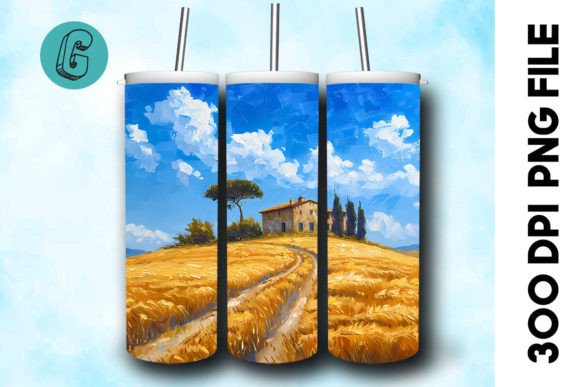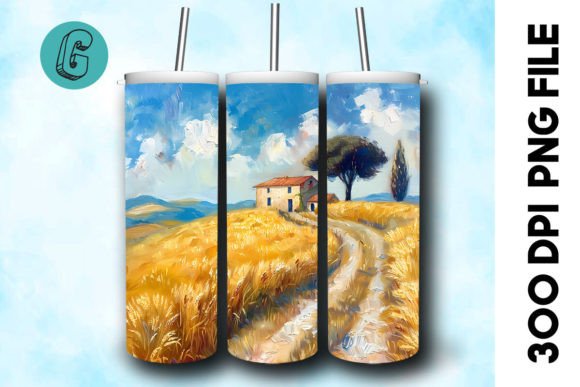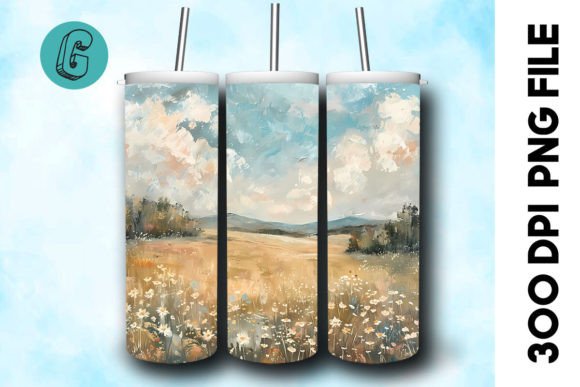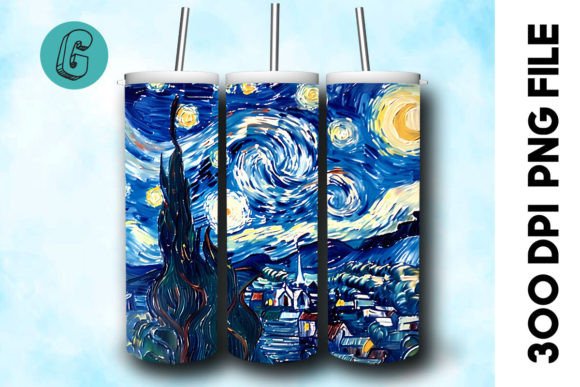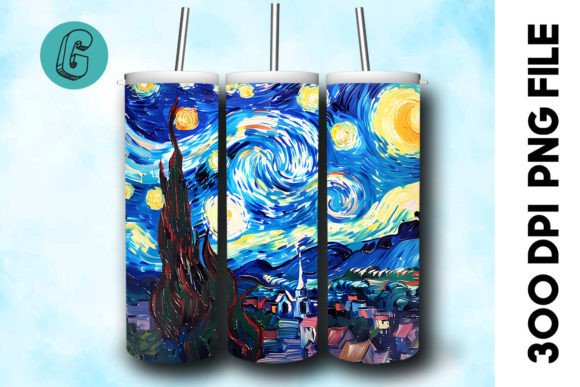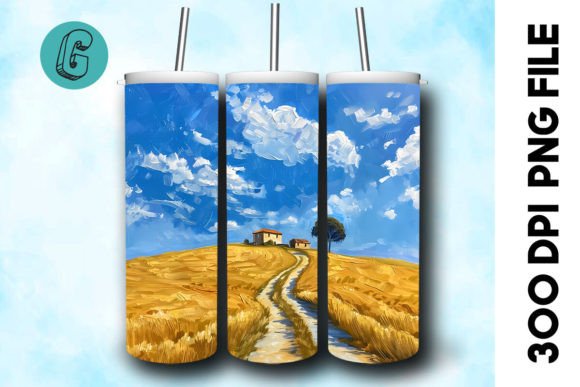
Oil Paint Landscape Tumbler Wrap 39
A Designer’s First Glance: Mood, Shape, and Embroidery Readiness
When I opened Oil Paint Landscape Tumbler Wrap 39, my eye went straight to the soft, painterly edges — not crisp vector lines, but gentle transitions between sky, hill, and distant trees. It feels like a watercolor sketch translated into digital form: loose, atmospheric, and intentionally imperfect. As a designer who regularly converts graphics into machine embroidery designs, I immediately asked: *Does this translate to stitch?* The answer isn’t yes or no — it’s “yes, if you treat it like what it is: a background graphic, not a line-art emblem.” Its horizontal wrap shape suggests tumbler use, but for embroidery, that same proportion works beautifully on tote bag sides, pillow covers, and apron hems — anywhere you want quiet visual rhythm without demanding focal attention.
Real-World Test: Turning It Into a Handmade Tote Bag Design
Last week, I used Oil Paint Landscape Tumbler Wrap 39 as the central motif on a natural linen tote for a local boutique launch. Not as a standalone appliqué, but as a subtle, tonal background layer beneath a small embroidered monogram. The result? Customers paused at the display — not because the design screamed, but because it felt intentional, considered, and quietly sophisticated. That’s the strength of this piece: it elevates a handmade product without competing with its function or texture. It doesn’t look “designed in” — it looks *lived with*. For Etsy sellers and small shop owners, that kind of quiet confidence builds trust faster than flashy motifs ever could.
Where It Shines (and Where It Needs Care)
Oil Paint Landscape Tumbler Wrap 39 excels in projects where atmosphere matters more than precision: baby embroidery on organic cotton blankets, holiday embroidery on tea towels, nursery decor pillow covers, and custom apparel like oversized sweatshirts where softness and drape are part of the appeal. Its low-contrast gradients hold up well in fill stitch when paired with matte thread — especially ecru, slate, or sage — and read clearly even at medium hoop sizes (5x7” and up).
But be thoughtful with placement. On stretchy fabric like jersey or thin knit t-shirts, the broad, blended areas can blur under tension unless stabilized with a firm cutaway + tear-away combo. On dark fabric, avoid light-thread-only versions — test with a mid-tone thread first. And skip using it full-scale on curved surfaces like caps: the horizontal flow fights the dome shape, and corners lose definition. Instead, crop and reposition key sections — say, just the horizon band — for cap brims or patch borders.
Design Assets That Support, Not Overwhelm
This isn’t a stand-alone satin-stitch logo. It’s a background graphic, and that changes how you approach it. As an embroidery file, it performs best when treated as a foundational layer — something that sets tone, then recedes slightly so your primary motif (a name, crest, or icon) stays legible. Think of it like choosing wallpaper before selecting furniture: get the base right, and everything else lands with more intention. For craft business owners building cohesive collections — say, a “Mountain Morning” kitchen set — Oil Paint Landscape Tumbler Wrap 39 gives instant continuity across tea towels, oven mitts, and aprons without repeating the same exact motif.
Stitching Clarity, Customer Perception, and Commercial Use
Here’s what I’ve noticed after three client projects using this design: people describe the finished product as “calm,” “thoughtful,” and “uniquely handmade.” That’s rare. Most generic landscape graphics read as clipart — this one reads as curated. Why? Because its brushstroke-inspired softness resists over-digitization. When stitched with moderate stitch density (not ultra-dense fill), it breathes. It doesn’t feel heavy or plasticky — critical for personalized gifts and boutique merchandise where tactile quality directly impacts perceived value.
That said, don’t assume it’s plug-and-play for every commercial embroidery project. If you’re selling finished items on Etsy or at craft fairs, confirm licensing terms for Oil Paint Landscape Tumbler Wrap 39 — especially regarding resale of physical goods. As a digital embroidery file, it’s meant for creative projects, but “commercial use” definitions vary. When in doubt, reach out to the creator or check the download page for clear terms before listing embroidered totes or sweatshirts.
Practical Designer Notes Before You Stitch
- Always test on scrap fabric first — especially with textured weaves like burlap or slub linen, where soft gradients can disappear.
- Check thread color contrast early: try stitching the same section in black, charcoal, and oatmeal to see which preserves depth without flattening the landscape.
- Review stitch density — if your software shows dense overlapping fills in sky or grass zones, reduce density by 10–15% to keep fabric supple.
- Confirm hoop size compatibility: this design stretches wide, so verify your machine handles at least a 6x10” area or plan to split and align carefully.
- Inspect small details — there are no tiny lettering or fine branches here, but subtle shifts in tone matter. Zoom in to ensure no unintended gaps appear between stitched zones.
- Test in black-and-white mockups — if it reads well without color, your stitch execution will hold up across fabric types.
- Use proper stabilizer: lightweight cutaway for stable fabrics; mesh + tear-away for knits. Skip basic tear-away alone — soft gradients need anchor.
- Compare light vs. dark backgrounds — the mood shifts dramatically. On cream, it’s serene; on navy, it becomes moody and modern.
Final Thought: A Quiet Asset for Intentional Makers
Oil Paint Landscape Tumbler Wrap 39 won’t win awards for technical complexity — and it shouldn’t. Its power lies in restraint. In a market saturated with bold, busy, over-digitized graphics, this background graphic offers breathing room. It supports storytelling instead of shouting over it. Whether you’re an embroidery designer prepping for a client’s wedding gift line, an Etsy seller refreshing seasonal kitchen collections, or a small shop owner curating boutique branding, this piece earns its place not as decoration — but as design intelligence. Use it thoughtfully, stabilize it well, and let its quiet landscape do the work.